
Gunlock Reservoir Fish Report for 3-9-2026
Spring provides some of the most exciting fishing of the year for largemouth
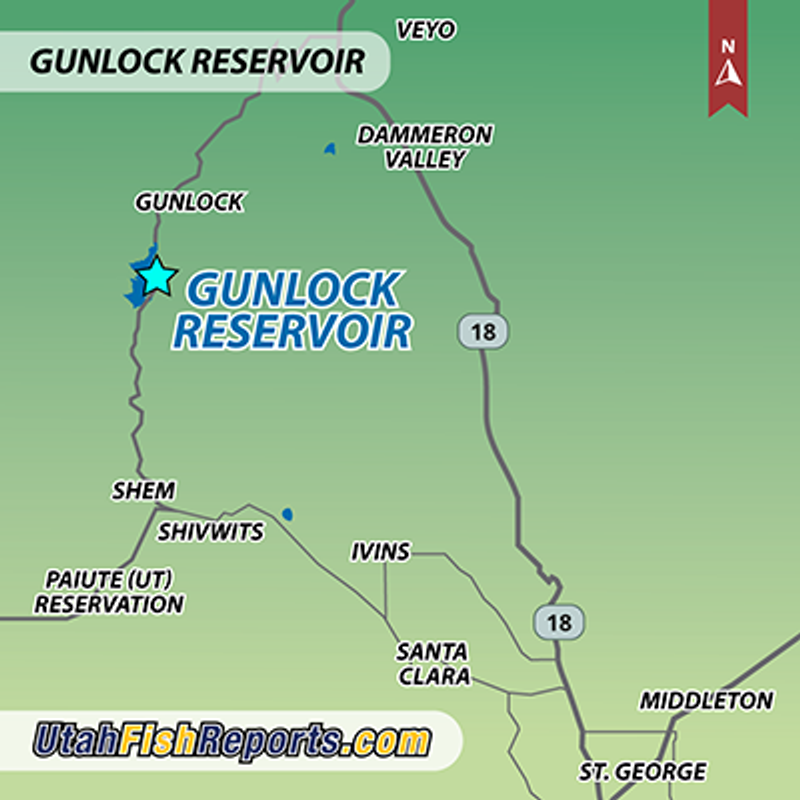
Gunlock Reservoir - Gunlock , UT (Washington County)
by Utah Division of Wildlife
3-9-2026
Website
Consult the Gunlock State Park webpage for boat ramp hours. Spring provides some of the most exciting fishing of the year for largemouth bass at the Washington County reservoirs, though fishing is not always consistent. Spring is a time of change for warmwater fish, and they are highly affected by daily weather patterns. Your best guide for spring fishing conditions is the weather forecast. Fishing is often best after multiple days of calm, warm weather. Fish will be fairly inactive for a few days after a storm or cold front. During the early spring, look for bass to begin moving into shallow water during the afternoon on warm, calm days. This activity continues as the water continues to warm into the upper 50s. Once the water reaches 60 degrees, the bass get even more active and start thinking about spawning. Male bass will start to build nests in the shallows (3–10 feet) and will often attack anything that gets too close to the nest. At this time, large females are often found a little deeper (15–25 feet), waiting for males to chase them over to a nest. After spawning, the females go back out to the deeper water while the males guard the nests. While catching fish during the spawn does not necessarily hurt spawning overall, it is best to release the fish close to where it was caught so that it is less likely to abandon the nest. Bluegill and black crappie will also be getting more active during the spring, and will spawn a little later than the bass do. Because it is a little higher in elevation, spring fishing at Gunlock Reservoir tends to lag a couple weeks or more behind the other reservoirs. Cold-weather bass fishing:Largemouth bass are often found in deep water (20–40 feet) during the early spring. Bass brought up from depths over 20 feet often struggle to swim back down because the air bladder over inflates with lessening water pressure at the surface. Some anglers like to "fizz" the fish by inserting a needle in the fish's side and deflating the air bladder. While the fish may swim away, this is highly discouraged because puncturing the air bladder makes it difficult for the fish to regulate its buoyancy until the puncture heals. Also, there is a high chance you may puncture other organs and infections may occur at the wound or internally. A better alternative is to use a descending device or a weighted milk crate tied upside down to a rope to carry the fish back down to the depth where you caught it.
Next Report >
Next Report >
More Reports
Utah Division of Wildlife Resources Reports
for Saturday, March 7th
Big Sandwash Reservoir: The wedge dock will not be put in until mid-to-late March
Brough Reservoir: Spring in the central Uinta Basin is a turbulent time
Bullock Reservoir: Spring is a time of increased activity at Bullock
Currant Creek Reservoir: Spring thaws in the area may take a long time to open the Current Creek Canyon
Lake Canyon: Ice-off conditions usually occur in April and can be excellent fishing
Pelican Lake : Pelican Lake Fishing Forecast
Red Fleet Reservoir: Current water levels at Red Fleet are still very low
Starvation Reservoir: Spring at Starvation Reservoir traditionally is very windy
Steinaker Reservoir: Spring fishing at Steinaker Reservoir can be fantastic as the ice melts
Utah Division of Wildlife Resources Reports
for Monday, March 2nd
Academy Mill Reservoir: This high-elevation waterbody can be difficult to access for ice fishing
Benchs Pond: Ice often melts off in late May
Blanding Reservoir: Ice often melts off this reservoir in March
Blue Lake: Snowdrifts may block access until late June this year
Boulger Reservoir: This high-elevation waterbody is a great location to try ice fishing for some trout
Carbon City Community Pond: Ice often melts off the pond in late March or early April
Cleveland Reservoir: Ice often melts off in late May
Dons Lake: Previous years’ stocked rainbows will be active as water temperature rises
Duck Fork Reservoir: Fishing pressure is very low during the winter
Electric Lake: Ice fishing is often fair to good for tiger and cutthroat trout with standard ice tackle and baits
Ferron Creek: Cutthroat trout get aggressive in the spring as they prepare to spawn
Ferron Reservoir: Fishing pressure is very low during the winter
Foy Lake : Winter access to this small lake is by snowmobile only
Gigliotti Pond: Ice often melts off the pond in late March or early Apri
Gooseberry Reservoir: Fishing pressure is very low during the winter
Huntington Reservoir: Trout are very active right after ice-on and usually provide good to excellent fishing along the dam
Joe's Valley Reservoir: Joes Valley Reservoir Fishing Forecast
Knight-Ideal Pond: Wellington City will open the pond to public access shortly after ice-off
Lloyds Lake: Ice often melts off this reservoir in March
Miller Flat Reservoir: Fishing pressure is very low during the winter
Millsite Reservoir: The reservoir is usually ice-free by late March
Monticello Lake: Winter access to this small lake is by snowmobile only
Petes Hole Reservoir: Generally, roads are clear and open by Memorial Day
Potters Pond: This high-elevation waterbody can be difficult to access for ice fishing
Price River: The local water conservancy district will begin releasing water from Scofield Reservoir
Recapture Reservoir: The ice typically melts in early-to-mid March
Scofield Reservoir: Ice fishing can provide great fishing for trout
Soup Bowl Reservoir: This high-elevation waterbody can be difficult to access for ice fishing
Straight Canyon Creek: Water will be released from Joe's Valley Reservoir in preparation for runoff
Wrigley Springs Reservoir: Winter access to this remote reservoir is by snowmobile only
Website Hosting and Design provided by TECK.net.
Fish Images provided by FishDatabase.com.
All Images Copyright Protected.