
Mason Valley Wildlife Management Area - Yerington, NV
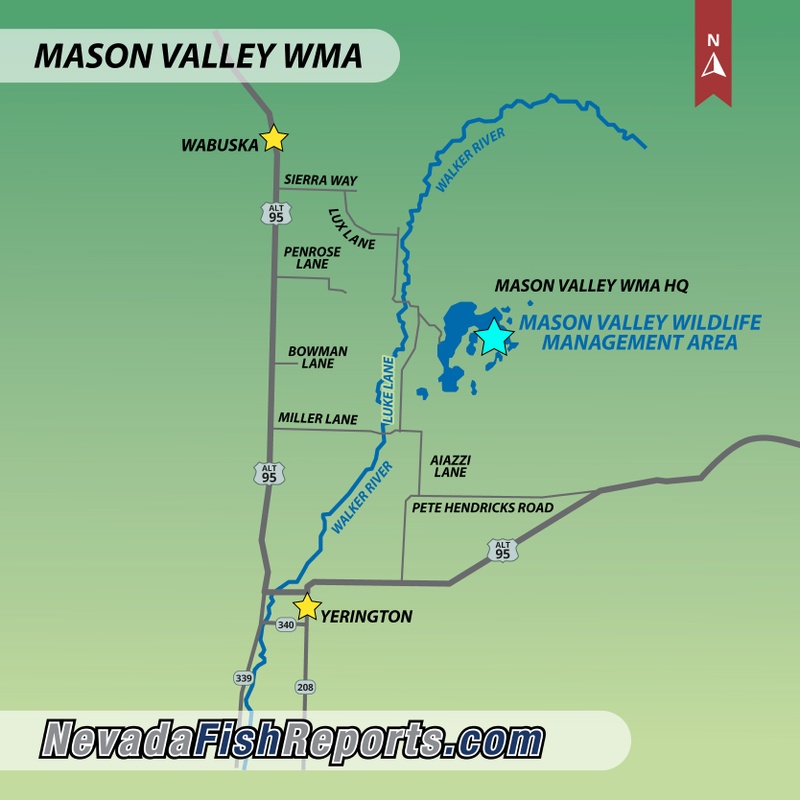
Lake Information
Mason Valley Wildlife Management Area (WMA), near Yerington, Nevada, is an extensive NDOW-managed complex of interconnected ponds, sloughs, and marshlands, critically recognized for both wildlife habitat and highly productive warmwater fisheries. The WMA sustains robust populations of Largemouth Bass (Micropterus salmoides), Channel Catfish (Ictalurus punctatus), Black Crappie (Pomoxis nigromaculatus), Bluegill (Lepomis macrochirus), and other panfish. These waters are actively managed, often through stocking, to ensure consistent angling opportunities within their varied and frequently vegetated aquatic environments.
Angling methodologies are comprehensive and adapted to the WMA's diverse, often shallow, and heavily vegetated habitats. For Largemouth Bass, casting weedless artificial lures (e.g., Texas-rigged soft plastics, jigs, spinnerbaits) into and along aquatic vegetation lines is highly efficacious, with topwater presentations yielding explosive strikes during crepuscular periods. Channel Catfish are primarily targeted by bottom-fishing with natural or prepared baits (e.g., cut bait, stink baits) during warmer months and at night. Panfish respond readily to diminutive jigs or worms presented under a bobber near structural cover and vegetation. Optimal fishing periods generally span from spring through autumn, correlating with elevated water temperatures and increased metabolic activity. Access is excellent via designated roads and multiple shoreline points, though float tubes or small electric-motorized watercraft often enhance navigability. Anglers are unequivocally mandated to consult current NDOW regulations, which are frequently pond-specific and may include seasonal closures related to waterfowl management, crucial for the sustained ecological and recreational integrity of this invaluable resource.
Angling methodologies are comprehensive and adapted to the WMA's diverse, often shallow, and heavily vegetated habitats. For Largemouth Bass, casting weedless artificial lures (e.g., Texas-rigged soft plastics, jigs, spinnerbaits) into and along aquatic vegetation lines is highly efficacious, with topwater presentations yielding explosive strikes during crepuscular periods. Channel Catfish are primarily targeted by bottom-fishing with natural or prepared baits (e.g., cut bait, stink baits) during warmer months and at night. Panfish respond readily to diminutive jigs or worms presented under a bobber near structural cover and vegetation. Optimal fishing periods generally span from spring through autumn, correlating with elevated water temperatures and increased metabolic activity. Access is excellent via designated roads and multiple shoreline points, though float tubes or small electric-motorized watercraft often enhance navigability. Anglers are unequivocally mandated to consult current NDOW regulations, which are frequently pond-specific and may include seasonal closures related to waterfowl management, crucial for the sustained ecological and recreational integrity of this invaluable resource.
2026 Nevada Regulations
Mason Valley Wildlife Management Area (Hinkson Slough, North Pond, Bass Pond, Beaver Slough, Crappie Pond, Walker River)
Open 2nd Saturday in February through September 30 on listed waters; any hour. Daily limit: 5 trout + 15 warmwater game fish (max 2 black bass, min 14 in). Flat wake restriction. Camping/campfires in designated sites only.
Boating Restrictions
Mason Valley Wildlife Management Area
- 5 kt speed limit · Flat wake required · Flat wake restriction in effect on open waters.
Detailed Map

Caught One?
Submit Your Catch from Mason Valley Wildlife Management Area
Add your photo to the Wall of Fame and our weekly fish report.
SportfishingReport.com © 2026. All Rights Reserved.
Website Hosting and Design provided by TECK.net.
Fish Images provided by FishDatabase.com.
All Images Copyright Protected.
Website Hosting and Design provided by TECK.net.
Fish Images provided by FishDatabase.com.
All Images Copyright Protected.