
Lake Tahoe - California and Nevada
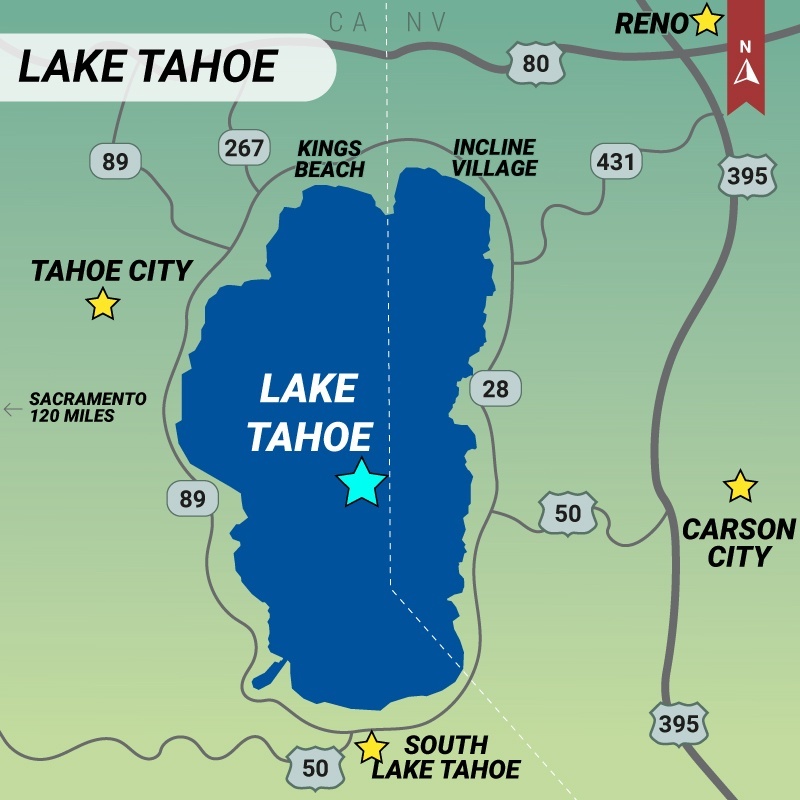
Lake Information
| Maximum Depth: | 1645 ft. |
| Elevation: | 6225 ft. |
Lake Tahoe presents one of California and Nevada’s most visually stunning and technically demanding fly fishing challenges. This deep, alpine lake holds mackinaw, rainbow and brown trout, and kokanee salmon, with fly fishing opportunities peaking during spring and fall.
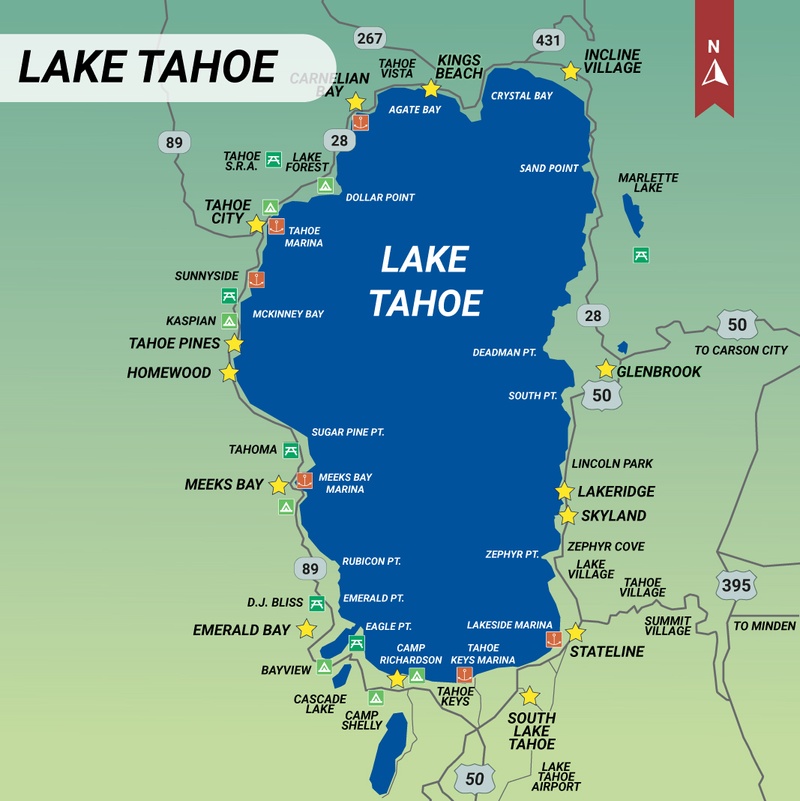
Most productive fly fishing occurs near inlets, drop-offs, and rocky shorelines—especially around Emerald Bay, Sand Harbor, and the Truckee River mouth. In spring, rainbow and brown trout cruise the shallows feeding on baitfish and midges, making streamer presentations with sinking lines highly effective. Olive buggers, clouser minnows, and zonkers work well when retrieved near rocky points and submerged structure.
Fall brings a chance at large brown trout staging at creek mouths like Taylor Creek. Anglers using full-sink or intermediate lines can target these fish by casting streamers early or late in the day. While mackinaw generally stay deep, some juvenile fish can be caught on fly gear in shallow water during cooler months.
Float tubes, small boats, or paddleboards are essential tools due to Tahoe’s size and depth. Shore fishing is possible in certain locations, but mobility greatly enhances success. The lake's clarity, wind exposure, and size demand stealth, planning, and patience.
Though not a numbers fishery, Lake Tahoe offers serious fly anglers a unique and scenic opportunity to catch large trout in a world-class alpine environment.
Most productive fly fishing occurs near inlets, drop-offs, and rocky shorelines—especially around Emerald Bay, Sand Harbor, and the Truckee River mouth. In spring, rainbow and brown trout cruise the shallows feeding on baitfish and midges, making streamer presentations with sinking lines highly effective. Olive buggers, clouser minnows, and zonkers work well when retrieved near rocky points and submerged structure.
Fall brings a chance at large brown trout staging at creek mouths like Taylor Creek. Anglers using full-sink or intermediate lines can target these fish by casting streamers early or late in the day. While mackinaw generally stay deep, some juvenile fish can be caught on fly gear in shallow water during cooler months.
Float tubes, small boats, or paddleboards are essential tools due to Tahoe’s size and depth. Shore fishing is possible in certain locations, but mobility greatly enhances success. The lake's clarity, wind exposure, and size demand stealth, planning, and patience.
Though not a numbers fishery, Lake Tahoe offers serious fly anglers a unique and scenic opportunity to catch large trout in a world-class alpine environment.
2026 Nevada Regulations
Lake Tahoe
Year round; 1 hr before sunrise to 2 hrs after sunset. Daily limit: 5 game fish. CLOSED AREAS: within 200-yard radius of mouths of Third, Incline, and Wood Creeks; 500-yard radius from Sand Harbor Boat Ramp; within boat launch area inside jetty at Cave Rock Boat Ramp. Interstate water: persons under 16 not required to have license; persons 16+ must have NV fishing license, NV Interstate Boundary Waters license, NV short-term permit, or CA fishing license. NEW 2026: Vessels must maintain flat wake when within 600 feet of shoreline (NRS 488.600(3)).
Boating Restrictions
Lake Tahoe
- Lake Tahoe — Zephyr Cove, Cave Rock, Round Hill Pines Beach, Glenbrook Bay (Douglas); Sand Harbor, Incline Village GIDB Ramp, Crystal Shores West (Washoe) · 5 kt speed limit · Flat wake required · Designated buoy zones at listed areas · NEW 2026: All vessels must also maintain flat wake within 600 feet of Lake Tahoe shoreline (NRS 488.600(3)).
Detailed Map
Caught One?
Submit Your Catch from Lake Tahoe
Add your photo to the Wall of Fame and our weekly fish report.
SportfishingReport.com © 2026. All Rights Reserved.
Website Hosting and Design provided by TECK.net.
Fish Images provided by FishDatabase.com.
All Images Copyright Protected.
Website Hosting and Design provided by TECK.net.
Fish Images provided by FishDatabase.com.
All Images Copyright Protected.